Cremation has been performed by many different civilizations throughout history. In the last few decades, cremation has become more common in this country, and funeral service providers have become increasingly attentive to the need for cremation options. The most common types of cremation arrangements are listed below.
Traditional Service Followed By Cremation
When cremation became more common in the last quarter of the prior century, cremation was often erroneously thought of as being synonymous with direct disposition, meaning without services or viewing.
The funeral profession has come to realize that the disposition of the body (either burial or cremation), is usually not a factor for families in deciding whether of not services are desired. In fact, the greatest increase in the type of arrangements made has been among families desiring traditional services and visitation, followed by cremation. This is made feasible through the introduction of ceremonial or ‘rental’ caskets, which are used for the service or viewing only. Also, there are caskets now being designed specifically for cremation, and are made of lightweight wood or wood composite materials. These caskets offer the appearance of more traditional hardwood caskets, but are more economical, and the body can remain with the casket during the cremation process.
With the use of a rental or cremation casket, traditional services can be held at either the funeral home or the family’s church, and with either an open or closed casket. Religious beliefs, ethnic customs, and personal preference will determine what type of service would be most appropriate.
Memorial Service
Another type of service is the memorial service, which is a funeral without the body present. If cremation is involved, the family may choose to have the cremated remains present, but this is a personal choice. A memorial service can be held in our funeral home, the church of your choice, or any other location that would be meaningful to you. Some settings, like a park, the beach, or in the mountains, which would be impractical for a traditional funeral, make ideal locations for memorial services.
Since a casket is not present at a memorial service, photographs, flowers, or personal mementos reflective of the decedent are usually arranged as the focal point of the service.
Visitation
Although visitation or viewing is usually held in addition to some type of service, some families desire a visitation followed by cremation. This would be appropriate when no services are desired, but the family would still like to have an opportunity to view the decedent, and to visit with relatives and friends. A visitation can be held for the family only, or be open to the public.
Direct Disposition
There is no requirement that any type of service be held prior to cremation. Some families choose to have a direct cremation, meaning that the body is cremated once the necessary legal documents have been completed. There is no viewing or service prior to the cremation.
Disposition Of Cremated Remains
Cremation affords a variety of options for the final disposition of the cremated remains. The family may take possession of the cremated remains, or the Evans Funeral Directors can deliver or ship the cremated remains to a cemetery or other location. The most common forms of disposition are as follows:
- Retention by the family at home
- Burial in a cemetery ground space (either individually or with previously interred family members)
- Placement in an above ground cemetery niche (called a columbarium)
- Scattering at sea (either by the mortuary or by the family)
- Scattering over land (on property owned by the person performing the scattering, or with the permission of the property owner)
- Placement in a cemetery scattering garden (St. Peter Lutheran Church Grounds)
Green Burial . . . something to consider as earth-friendly information
Back to the earth - Green burial is one of those "new ideas" that is actually a very old idea. Green burial (also called "direct burial") means that the body is buried in a simple container, with no embalming (which requires formaldehyde and other chemicals) and much less ceremony. There is usually no viewing or visitation. The body is buried much sooner after death than it would be in a traditional ceremony.
A green or direct burial is also likely to cost much less than a traditional service as there are no fees for care of the body, viewing time or transportation. As well, there is no casket or cemetery plot. Green burials often take place in special reserves set aside for just this purpose. In the US, 32 acres of land have been set aside at the Ramsey Creek Preserve, near Westminster, South Carolina. Between five and ten people a year are interred there every year, though the trend is catching on. In other areas of the world, such as Great Britain, direct burial is a more accepted practice. There are over 200 direct burial cemeteries in the UK alone.
Cremation itself is considered "green" by many, as there is less land use and often no casket (though more air pollution). Direct cremation is even greener, in that the body is cremated soon after death without embalming. There is also no viewing or visitation involved. Direct cremation certainly costs less than a traditional funeral. Costs are generally restricted to the funeral home's basic services fee, some transportation, care fees and a crematory fee.
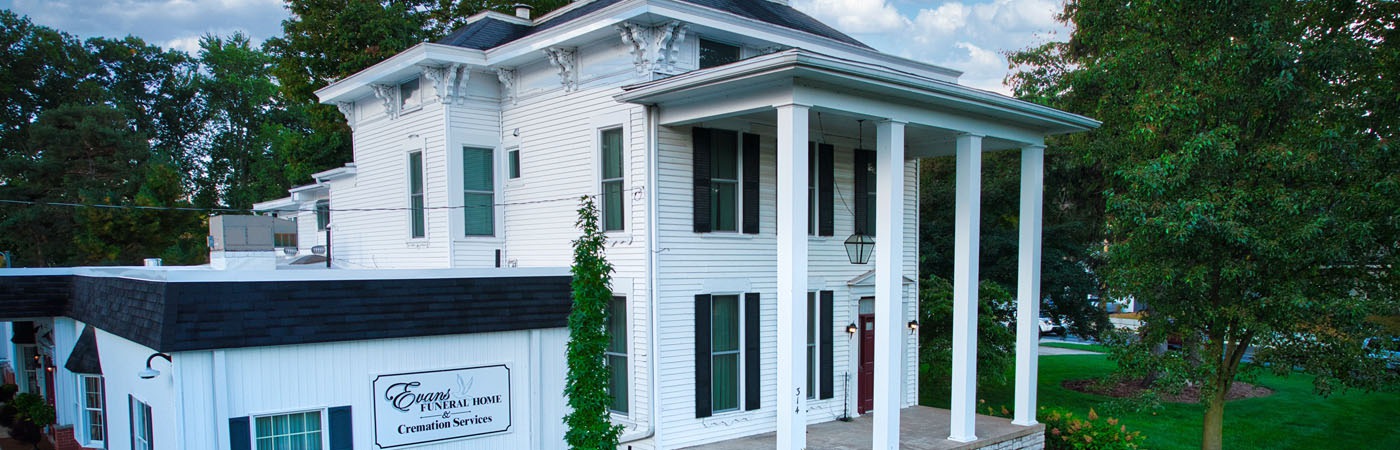
Evans Funeral Home provides a variety of cremation options to meet every family's needs. Please contact us if you have any questions regarding our cremation services.
Resources
Cremation Options by Batesville
Living Legacy with Eternal Reefs
Home | Services |
About Us | Resources | Veterans |
Obituaries | Location |
Site Map

We accept VISA, MasterCard, and Discover
Copyright © 2006 - 2008 Evans Funeral Home and its Licensors. All Rights Reserved.
Website Design and Hosting By Viking Technology, Inc